Introduction
Professional elevator maintenance relies on more than experience—it requires the right elevator testing tools. Whether performing routine inspections, troubleshooting faults, or replacing critical Lift spare parts, accurate testing equipment helps technicians diagnose problems efficiently and maintain safe working conditions.
The Elevator Field Safety Quick Reference Manual emphasizes that technicians should always use the correct tools and safe working methods, and that electrical verification should be performed with approved measuring equipment before maintenance begins.
This guide introduces the most important testing tools used during elevator maintenance, explains their applications, and provides recommendations for building a professional toolkit.
Why Elevator Testing Tools Matter
Modern elevators integrate:
- High-voltage electrical systems
- Variable Frequency Drives (VFDs)
- Safety circuits
- Door operators
- encoders
- Communication networks
- Mechanical drive systems
Without proper testing equipment, technicians may:
- Misdiagnose faults
- Replace unnecessary components
- Increase maintenance costs
- Create unsafe working conditions
Using professional elevator testing tools improves diagnostic accuracy and reduces equipment downtime.
Categories of Elevator Testing Tools
Professional elevator maintenance tools generally fall into six categories:
- Electrical testing tools
- Mechanical measurement tools
- Safety testing equipment
- Diagnostic instruments
- Inspection tools
- Hand tools
Each category serves a different purpose during maintenance and troubleshooting.
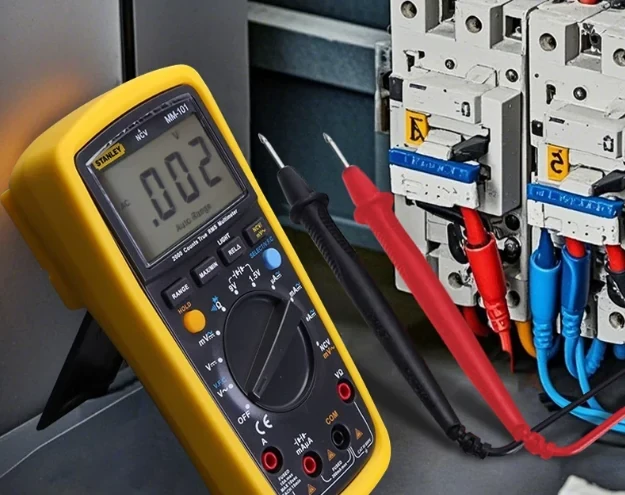
1. Digital Multimeter (Most Important Tool)
A Digital Multimeter (DMM) is the most frequently used instrument during elevator maintenance.
Applications include:
- AC voltage measurement
- DC voltage measurement
- Resistance testing
- Continuity testing
- Diode testing
- Frequency measurement
According to the uploaded safety manual, technicians should verify zero-energy status with a CAT III or CAT IV digital multimeter before beginning maintenance.
Recommended Features
- CAT III / CAT IV Safety Rating
- True RMS
- Auto-ranging
- Backlit display
- Data hold function
2. Clamp Meter
A clamp meter measures current without disconnecting electrical wiring.
Typical applications include:
- Motor current
- Brake coil current
- Fan motor testing
- Door operator current
- Three-phase load balancing
It is especially useful for diagnosing overload conditions and abnormal motor performance.
3. Insulation Resistance Tester (Megohmmeter)
An insulation tester measures insulation resistance between conductors and ground.
Applications:
- Motor insulation
- Traveling cable
- Controller wiring
- Door operator cables
- Encoder cables
Poor insulation can lead to intermittent faults or electrical leakage.
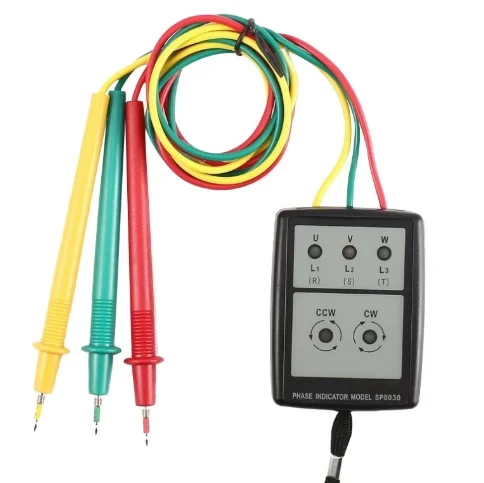
4. Phase Sequence Tester
Incorrect phase rotation can cause:
- Reverse motor rotation
- Drive faults
- Brake problems
A phase sequence tester quickly confirms proper three-phase wiring.
5. Clamp Thermometer / Infrared Thermometer
Overheating often indicates developing problems.
Common inspection points:
- Drive modules
- Contactors
- Motor bearings
- Brake coils
- Transformers
Infrared thermometers allow non-contact temperature measurement.
6. Elevator Door Lock Tester
The elevator door lock is one of the most important safety devices.
Door lock testing includes:
- Contact continuity
- Contact resistance
- Mechanical engagement
- Lock timing
Routine testing prevents unnecessary shutdowns caused by faulty door lock circuits.
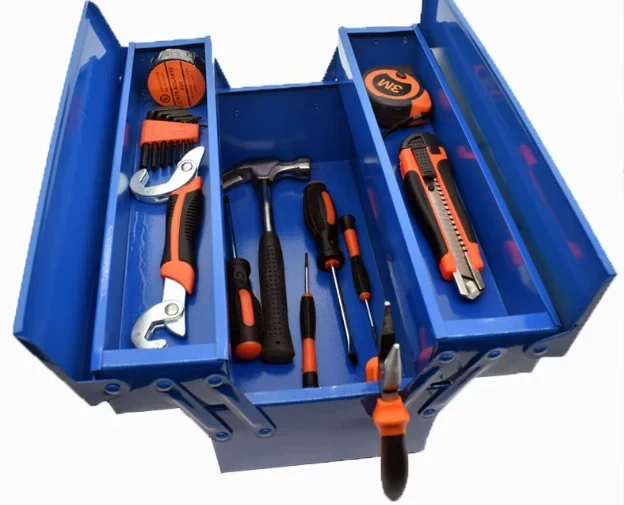
7. Insulated Screwdriver Set
Professional insulated tools protect technicians when working around energized equipment.
Applications include:
- Terminal tightening
- PCB replacement
- Controller maintenance
- Relay replacement
Always use tools rated for electrical work.
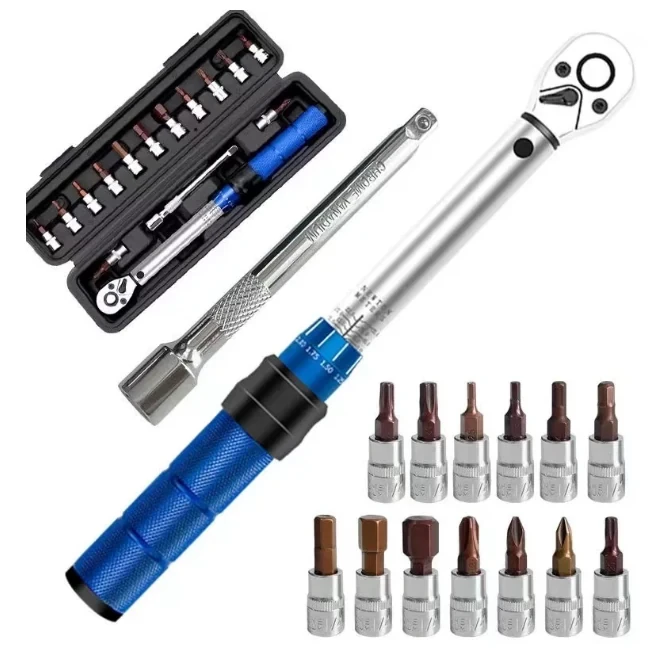
8. Torque Wrench
Loose terminals are a common cause of failures.
A torque wrench ensures:
- Correct tightening force
- Improved reliability
- Reduced vibration damage
Critical applications include:
- Power terminals
- Brake assemblies
- Guide shoe mounting
- Motor connections
9. Flashlight and Portable LED Work Light
Elevator maintenance frequently occurs in:
- Elevator pits
- Machine rooms
- Elevator shafts
- Car tops
Portable lighting improves visibility and reduces safety risks.
10. Inspection Mirror
Many elevator components are difficult to see directly.
Inspection mirrors help technicians examine:
- Door lock contacts
- Guide shoe wear
- Traveling cables
- Hidden bolts
- Electrical terminals
Mechanical Inspection Tools
Besides electrical instruments, technicians also use:
Feeler Gauge
For measuring:
- Door lock gaps
- Brake clearances
- Mechanical tolerances
Steel Ruler
Useful for:
- Door gap measurement
- Rail inspection
- Component alignment
Vernier Caliper
Measures:
- Shaft diameter
- Roller wear
- Bearing dimensions
- Mechanical components
Safety Equipment Used During Testing
Professional technicians should also carry:
- Safety helmet
- Insulated gloves
- Safety glasses
- Arc-flash PPE
- Safety shoes
- Lockout Tagout kit
The uploaded safety manual emphasizes using appropriate PPE and the correct tools before beginning work.
Components Commonly Tested
Professional maintenance commonly includes testing:
- Elevator door lock
- Guide shoe
- Lift buttons
- Door operator
- Traveling cable
- Encoder
- Brake
- Safety circuit
- Emergency stop
- Controller PCB
- Leveling sensors
Routine testing extends the service life of critical lift spare parts.
Building a Professional Elevator Toolbox
A recommended starter toolkit includes:
| Tool | Priority |
|---|---|
| Digital Multimeter | ★★★★★ |
| Clamp Meter | ★★★★★ |
| Insulation Tester | ★★★★★ |
| Insulated Screwdrivers | ★★★★★ |
| Torque Wrench | ★★★★☆ |
| Flashlight | ★★★★★ |
| Phase Tester | ★★★★☆ |
| Feeler Gauge | ★★★★☆ |
| Infrared Thermometer | ★★★★☆ |
| Inspection Mirror | ★★★☆☆ |
Common Mistakes When Using Elevator Testing Tools
Avoid these common errors:
❌ Using damaged test leads
❌ Measuring current with the wrong meter setting
❌ Skipping instrument calibration
❌ Using low-quality measuring equipment
❌ Ignoring CAT safety ratings
❌ Testing energized circuits without proper PPE
Professional tools should be inspected regularly and replaced if damaged.
Choosing Quality Lift Spare Parts
Even the best testing tools cannot compensate for poor-quality replacement parts.
Choose lift spare parts from a reliable elevator parts supplier that offers:
- OEM-compatible components
- Quality certification
- Technical documentation
- Fast international shipping
- Product traceability
Frequently supplied products include:
- Elevator door lock
- Guide shoe
- Lift buttons
- Elevator door stopper
- PCB boards
- Door operator parts
- Safety relays
- Elevator parts for sale
Frequently Asked Questions
What is the most important elevator testing tool?
A CAT III or CAT IV digital multimeter is generally considered the most essential tool because it is used for voltage verification, continuity testing, and electrical troubleshooting. The uploaded safety manual specifically requires a CAT III/IV multimeter for verifying zero-energy status before maintenance.
Why is an insulation tester important?
It detects insulation deterioration before it develops into electrical faults, helping prevent equipment damage and unexpected downtime.
Should inexpensive testing tools be used?
Professional technicians should use reliable, safety-rated instruments that comply with applicable electrical safety standards. High-quality tools provide more accurate measurements and better protection when working on elevator systems.
What components require regular testing?
Routine maintenance commonly includes:
- Elevator door lock
- Guide shoe
- Lift buttons
- Safety circuits
- Brake systems
- Door operators
- Traveling cables
- Controllers
Conclusion
Professional elevator maintenance depends on both skilled technicians and reliable elevator testing tools. From digital multimeters and insulation testers to torque wrenches and infrared thermometers, every tool plays an important role in ensuring safe and accurate diagnostics.
Combined with high-quality lift spare parts from a trusted elevator parts supplier, proper testing practices improve elevator reliability, reduce maintenance costs, and enhance passenger safety.
Investing in professional tools is an investment in safer maintenance, more accurate troubleshooting, and longer equipment life.