Introduction
The elevator machine room is one of the most important working areas in a conventional elevator installation.
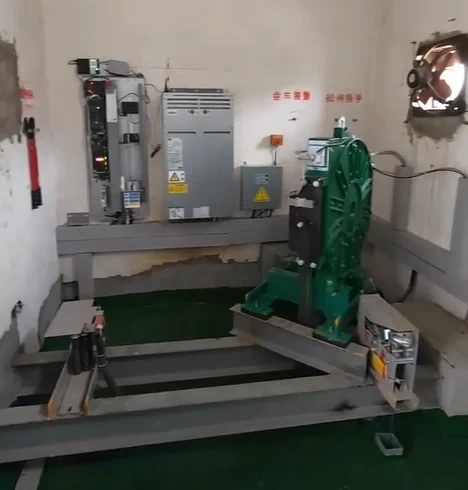
It contains critical equipment responsible for elevator movement and control, including the traction machine, control cabinet, electrical equipment and related components.
A properly prepared machine room provides:
- Adequate structural support
- Suitable environmental conditions
- Reliable electrical power
- Sufficient lighting
- Proper ventilation
- Safe technician access
- Appropriate equipment working space
- Protection for electrical and mechanical equipment
If the machine room is not properly prepared, installation problems can appear later during commissioning and maintenance.
The supplied technical reference specifically identifies machine-room requirements covering temperature, humidity, electrical conditions, floor loading, traction-machine support, access, ventilation, lighting, power distribution and equipment arrangement.
1. What Is an Elevator Machine Room?
An elevator machine room is the area used to house the major mechanical and electrical equipment required for elevator operation.
In the elevator structure described in the supplied document, the main systems include the traction system and electrical control system.
The traction system includes equipment such as:
- Traction machine
- wire rope
- Guide components
- Related mechanical equipment
The electrical control system includes:
- Control cabinet
- Operating/control equipment
- Leveling-related control
- Position indication
- Other electrical control components
The document's basic elevator structure diagram identifies the control cabinet, traction machine, wire rope, overspeed governor, safety gear, car, guide rails, counterweight, landing doors and buffer as major elevator components.
Therefore, the machine room should not be considered simply as a room where the motor is installed. It is an important technical area where mechanical drive and electrical control systems work together.
2. Elevator Machine Room Environmental Requirements
The supplied document gives several environmental requirements for the elevator installation environment.
It specifies:
- Air temperature: 5°C to 40°C
- Relative humidity: not greater than 85% at 25°C
- No explosive gases or conductive dust
- No corrosive metal or insulation-damaging substances
- Supply voltage fluctuation within the range specified by the document
Again, these values should be treated as reference-document requirements, not as universal current requirements for every elevator.
The actual project should follow the equipment manufacturer's environmental specifications and applicable local requirements.
3. Elevator Machine Room Floor Requirements
The machine-room floor must be capable of supporting the installed equipment.
The supplied document specifies a floor load-bearing requirement of:
6865 Pa per square meter
for the machine-room floor.
The important engineering principle is that the floor must be structurally suitable for the equipment installed above it.
The technician or installation contractor should therefore confirm:
- Floor structural condition
- Equipment mounting locations
- Traction machine support
- Control cabinet mounting
- Cable penetration locations
- Openings through the machine-room floor
Why is this important?
The traction machine generates mechanical forces during elevator operation.
If the support structure is inadequate, it can contribute to:
- Equipment movement
- Excessive vibration
- Abnormal noise
- Alignment problems
- Long-term mechanical stress
4. Elevator Traction Machine Support
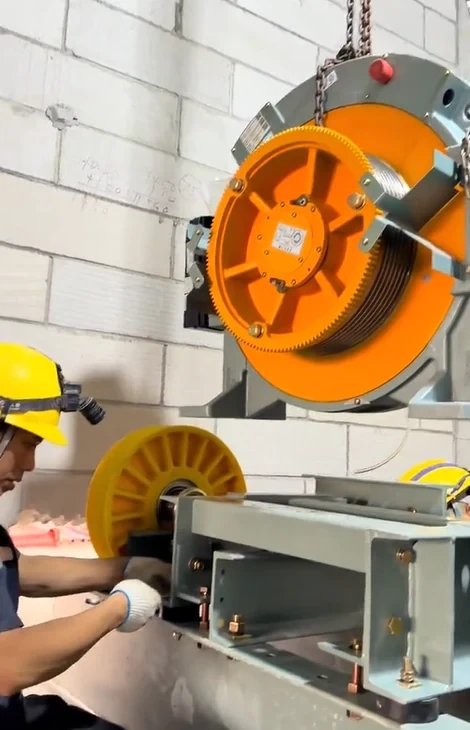
The traction machine is one of the most important components in the machine room.
The supplied document specifies that where the traction-machine bearing beam penetrates the load-bearing wall, the support length should exceed the specified minimum and should not be less than 75 mm, with a stated insertion requirement of more than 20 mm.
These figures belong to the reference document and must be verified against the actual elevator design before construction.
Installation checks should include:
- Correct traction machine model
- Correct installation location
- Proper support structure
- Secure fastening
- Correct alignment
- Correct rope path
- Proper brake condition
- Appropriate access for future maintenance
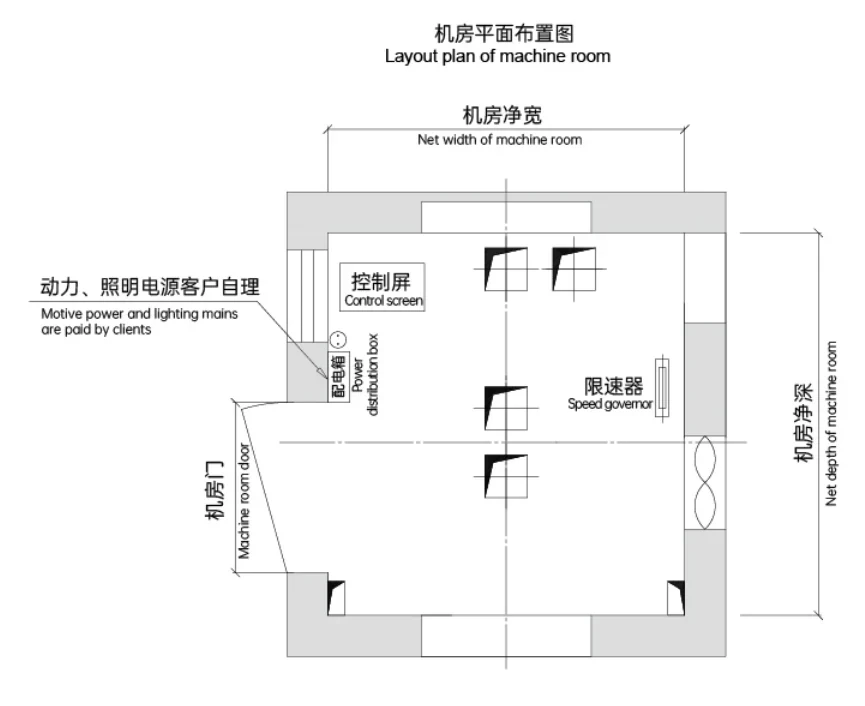
5. Elevator Machine Room Equipment Layout
A machine room normally contains several pieces of equipment that need to work together.
Typical equipment may include:
Traction Machine
Provides the mechanical force required to move the elevator.
Control Cabinet
Contains the elevator control equipment and related electrical components.
Overspeed Governor
Works as part of the elevator safety system.
Electrical Distribution Equipment
Provides power to the elevator system.
Lighting and Service Equipment
Provides safe working conditions for installation and maintenance.
The layout should provide sufficient space for:
- Inspection
- Adjustment
- Testing
- Troubleshooting
- Component replacement
- Routine maintenance
A good layout also helps technicians identify equipment quickly during a breakdown.
6. Elevator Machine Room Access
The machine room must provide safe and practical access.
The supplied document states that the machine-room floor should be level and that doors should open outward. It also describes requirements for access routes, handrails and stair arrangements where applicable.
The access route should therefore be checked before equipment installation.
Check the following:
- Machine-room entrance
- Door opening direction
- Access stairs
- Handrails
- Walking area
- Equipment transportation route
- Floor condition
- Obstructions
This becomes particularly important when large equipment such as a traction machine or control cabinet needs to be transported into the machine room.
7. Elevator Machine Room Door and Signage
The supplied document specifies that the machine-room entrance should have appropriate warning signage indicating that unauthorized persons are not permitted to enter.
This is important because the machine room contains potentially hazardous:
- Electrical energy
- Mechanical movement
- Rotating equipment
- Stored energy
- High-voltage equipment
The machine room should therefore be treated as a controlled technical area.
8. Machine Room Floor Openings
Cable openings and other penetrations through the machine-room floor need to be properly considered.
The reference document discusses the clearance around steel wire rope and floor openings, and requires appropriate protection and construction arrangements.
Openings should not be left unprotected.
They may create risks involving:
- Falling objects
- Cable damage
- Trip hazards
- Contamination
- Access problems
During final inspection, technicians should confirm that unnecessary openings are properly closed or protected.
9. Elevator Machine Room Ventilation
Ventilation is an important part of the machine-room environment.
The supplied document explicitly requires the machine room to have ventilation and states that air from other building areas should not simply be discharged into the machine room.
Adequate ventilation helps control the environmental conditions around elevator equipment.
This is especially important for electrical and mechanical equipment that can generate heat during operation.
Ventilation inspection checklist
- Ventilation system available
- Airflow unobstructed
- No unnecessary heat source
- No corrosive or harmful atmosphere
- Equipment cooling requirements satisfied
- Manufacturer's requirements satisfied
10. Elevator Machine Room Lighting
Good lighting is essential for maintenance and troubleshooting.
The supplied document specifies fixed electrical lighting for the machine room and gives a minimum floor illumination value of 200 lux. It also describes switching arrangements near the machine-room entrance.
For a maintenance technician, adequate lighting is particularly important when:
- Reading wiring diagrams
- Checking terminal connections
- Inspecting a PCB
- Measuring voltage
- Checking relays and contactors
- Inspecting the brake
- Adjusting mechanical components
- Reading equipment labels
11. Elevator Machine Room Power Supply
The elevator power supply is a critical part of machine-room preparation.
The reference document states that the elevator power supply should be independently provided and that the cable specification and voltage level should meet the design requirements.
In practice, the installation team should verify:
- Incoming power
- Main disconnect
- Protective devices
- Cable size
- Voltage
- Phase configuration
- Grounding
- Control power
- Lighting supply
- Auxiliary power
The actual values must always be checked against the elevator manufacturer's electrical drawings.
12. Separate Elevator Power and Lighting Circuits
The supplied document describes separate arrangements for elevator power and lighting-related circuits.
It also identifies certain circuits that should remain available under the relevant main elevator power isolation arrangement, including:
- Car lighting
- Car electrical outlet
- Machine-room and adjacent-area lighting
- Machine-room electrical outlet
- Elevator shaft lighting
- Alarm equipment
This illustrates an important principle:
Disconnecting the main elevator power should not automatically eliminate every service and safety-related electrical supply.
The exact circuit arrangement must follow the elevator electrical schematic.
13. Elevator Machine Room Grounding
The supplied document requires the neutral and grounding conductors to be separately arranged.
Grounding is particularly important in an elevator machine room because multiple electrical and electronic systems may coexist.
These may include:
- Elevator controller
- Drive system
- Control cabinet
- Motor
- Brake equipment
- Communication equipment
- Sensors
- Inspection equipment
A poor grounding arrangement can create electrical safety risks and may also contribute to control or communication problems.
14. Electrical Insulation Inspection
The installation quality section of the supplied document specifies insulation resistance testing for electrical equipment and wiring, with a reference value greater than 0.5 MΩ.
This should be treated as a requirement from the supplied reference material rather than a universal value.
Before performing insulation testing, technicians must follow:
- The elevator manufacturer's procedure
- Applicable electrical safety procedures
- Appropriate test equipment requirements
- Correct isolation procedures
For modern elevator systems containing sensitive electronics, the test method and test voltage should also be confirmed with the manufacturer before testing.
15. Elevator Control Cabinet Installation
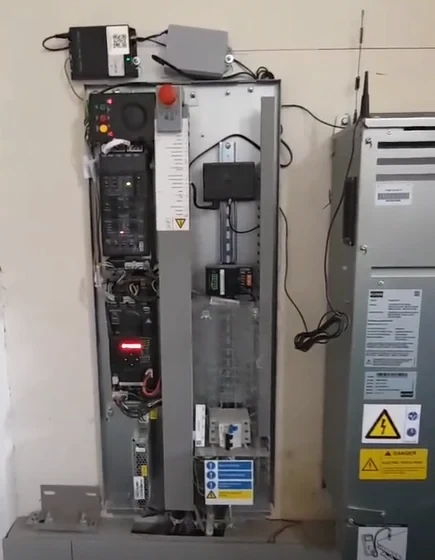
The elevator control cabinet is one of the most important electrical components in the machine room.
The cabinet may contain:
- Main controller
- Drive-related components
- Relays
- Contactors
- Terminal blocks
- Safety circuit components
- Communication interfaces
- I/O boards
- Protection devices
The control cabinet should be:
- Correctly positioned
- Securely mounted
- Properly wired
- Clearly labeled
- Accessible for maintenance
- Protected from unnecessary contamination
16. Why Control Cabinet Location Matters
A poorly positioned control cabinet can make future maintenance difficult.
For example, technicians may need to:
- Read error codes
- Measure voltage
- Check communication signals
- Inspect relays
- Replace a PCB
- Check terminal connections
- Test safety circuits
If there is insufficient working space around the cabinet, troubleshooting becomes slower and less safe.
Therefore, machine-room equipment layout should consider not only initial installation but also the entire service life of the elevator.
17. Elevator Machine Room and Traction System
The machine room is closely connected with the traction system.
The basic elevator structure shown in the supplied document identifies:
- Control cabinet
- Traction machine
- Wire rope
- Overspeed governor
- Overspeed governor rope
- Tensioning device
- Elevator car
- Safety gear
- Car door safety contact
- Guide rail
- Counterweight
- Landing door
- Buffer
This diagram is useful because it shows that the machine room cannot be evaluated independently from the shaft equipment.
The traction machine, wire rope, overspeed governor and control system all have to work together.
18. Traction Machine Installation Inspection
During installation inspection, the supplied reference material includes checks of:
- Wire rope
- Traction machine
- Traction-machine bearing support
- Traction sheave
- Guide sheave
- Overspeed governor
- Rope tension
- Brake clearance
- Traction rope connection
Technician checklist
Traction Machine
- Correct model
- Correct mounting
- Secure fastening
- Brake inspected
- Rotation direction checked
Sheaves
- Correct position
- Proper alignment
- Smooth rotation
- No abnormal damage
Wire Rope
- Correct specification
- Correct routing
- Proper connection
- Appropriate tension
- No visible damage
19. Elevator Brake Inspection
The brake is a critical component of the traction system.
The supplied material specifies inspection of brake components and brake clearance during installation quality inspection.
During inspection, technicians should verify:
- Brake mechanism
- Brake release
- Brake application
- Brake adjustment
- Brake clearance
- Brake electrical connection
- Brake feedback where applicable
The brake should not be treated simply as a motor accessory. It is an important part of the elevator stopping and safety system.
20. Machine Room and Elevator Testing
The machine room is also the primary location for many commissioning activities.
Before the elevator is placed into normal operation, the supplied document calls for overall inspection including:
- Installation quality
- Insulation resistance
- Grounding
- Lubrication
- Electrical equipment
- Mechanical equipment
- Power supply
- Test operation
This is where professional elevator testing tools become important.
Typical tools may include:
- Multimeter
- Insulation tester
- Clamp meter
- Measurement tools
- Mechanical adjustment tools
- Manufacturer-specific diagnostic equipment
The exact tools required depend on the elevator model and test procedure.
21. Machine Room Maintenance Considerations
A good machine room should be easy to maintain.
The maintenance technician should be able to inspect:
- Traction machine
- Brake
- Control cabinet
- Electrical connections
- Wire rope
- Overspeed governor
- Sheaves
- Relays
- Contactors
- Control boards
The supplied maintenance section emphasizes routine cleaning, lubrication, inspection and periodic maintenance of elevator equipment.
A clean and organized machine room makes it easier to identify abnormal conditions before they become serious failures.
22. Machine Room Cleanliness
The machine room should be kept clean.
Avoid unnecessary:
- Dust
- Oil contamination
- Water
- Construction debris
- Packaging materials
- Unused tools
- Loose cables
- Unrelated equipment
This is especially important around:
- Control cabinets
- Drive equipment
- Relays
- Contactors
- Cooling systems
- Mechanical equipment
Good housekeeping also improves technician safety.
23. Machine Room Inspection Before Elevator Commissioning
Before commissioning, the installation team can use the following checklist.
Environment
- Temperature checked
- Humidity/environment checked
- No corrosive atmosphere
- No explosive atmosphere
- Ventilation available
Building
- Floor completed
- Structural support checked
- Equipment mounting locations prepared
- Access route completed
- Door installed
- Warning signage installed
Lighting
- Fixed lighting installed
- Lighting switch accessible
- Working areas adequately illuminated
- Required service outlets available
Electrical
- Main power supply available
- Power specification checked
- Control cabinet installed
- Wiring completed
- Grounding completed
- Insulation checked according to approved procedure
Mechanical
- Traction machine installed
- Brake checked
- Sheaves checked
- Wire ropes checked
- Overspeed governor checked
- Rope tension checked
Final
- Machine room clean
- Equipment labels visible
- Drawings available
- Test instruments available
- Installation records completed
24. Common Elevator Machine Room Problems
Several machine-room problems can later become elevator maintenance problems.
Problem 1: Poor Ventilation
Possible result:
- Excessive equipment temperature
- Reduced equipment reliability
- Difficult working environment
Problem 2: Poor Lighting
Possible result:
- Difficult troubleshooting
- Incorrect wiring identification
- Poor inspection visibility
Problem 3: Poor Cable Arrangement
Possible result:
- Difficult maintenance
- Cable damage
- Confusing troubleshooting
Problem 4: Poor Equipment Layout
Possible result:
- Difficult PCB replacement
- Difficult electrical measurement
- Difficult brake adjustment
- Longer maintenance time
Problem 5: Water or Moisture
Possible result:
- Electrical insulation problems
- Corrosion
- PCB damage
- Terminal problems
Problem 6: Incorrect Grounding
Possible result:
- Electrical safety problems
- Communication interference
- Control-system abnormalities
25. Elevator Machine Room Spare Parts
Machine-room equipment is closely connected with the elevator spare-parts supply chain.
Depending on the elevator system, maintenance teams may need:
- Elevator control boards
- Drive boards
- I/O boards
- Contactors
- Relays
- Brake components
- Sensors
- Encoder components
- Cooling fans
- Power supply components
- Electrical terminals
For maintenance companies, having reliable access to compatible elevator spare parts can significantly reduce elevator downtime.
A professional elevator parts supplier should be able to provide accurate model information and technical support rather than simply supplying a visually similar component.
26. Machine Room Components and Future Maintenance
When selecting or replacing elevator components, technicians should confirm:
- Exact model
- Part number
- Electrical specification
- Software/firmware compatibility where applicable
- Manufacturer requirements
- Mechanical compatibility
- Installation position
- Wiring configuration
This is particularly important for electronic components such as elevator PCBs.
A replacement board that looks identical may not necessarily be compatible with the complete elevator control system.
27. Machine Room Safety During Maintenance
The supplied reference document emphasizes that installation and maintenance work should be performed under controlled safety conditions.
Before working on equipment that does not need to remain energized, the equipment should be isolated according to the applicable safety procedure.
Electrical and mechanical energy must be considered separately.
For example, an elevator technician may be exposed to:
- Electrical energy
- Mechanical movement
- Stored mechanical energy
- Rotating equipment
- Suspended loads
Therefore, technicians should follow the manufacturer's safety procedure and local occupational safety requirements before beginning work.
28. Machine Room Handover Documentation
A complete elevator installation should include technical documentation.
The supplied material lists documents such as:
- Product certificates
- Installation inspection records
- Guide rail inspection records
- Car and landing door inspection records
- Control cabinet and wiring records
- Electrical insulation records
- Grounding records
- Safety-device records
- Test records
- Self-inspection reports
The machine-room documentation should therefore be organized before final handover.
29. Machine Room Final Inspection Checklist
Here is a condensed checklist that can be used by an installation or maintenance company.
| Inspection Area | Check Item |
|---|---|
| Environment | Temperature and humidity |
| Ventilation | Ventilation system |
| Floor | Structural and equipment support |
| Access | Door, stairs and working route |
| Lighting | Fixed machine-room lighting |
| Power | Main elevator supply |
| Grounding | Grounding system |
| Control | Control cabinet |
| Drive | Traction machine |
| Brake | Brake operation and adjustment |
| Rope | Wire rope condition and installation |
| Sheave | Sheave alignment and condition |
| Governor | Overspeed governor |
| Wiring | Cable routing and terminals |
| Safety | Safety-related equipment |
| Cleanliness | Machine-room housekeeping |
| Documents | Drawings and inspection records |
| Testing | Required commissioning tests |
30. Why Machine Room Quality Matters
The machine room is directly connected to elevator reliability.
Consider the following chain:
Poor machine-room environment
↓
Electrical/mechanical equipment operates under unfavorable conditions
↓
Higher risk of abnormal operation
↓
More maintenance requirements
Another example:
Poor equipment layout
↓
Difficult troubleshooting
↓
Longer repair time
↓
Longer elevator downtime
And:
Poor traction-machine installation
↓
Mechanical vibration or alignment problems
↓
Abnormal running condition
↓
Increased maintenance requirements
Therefore, machine-room installation quality should be considered part of the elevator's long-term reliability strategy.
Frequently Asked Questions
What equipment is installed in an elevator machine room?
Major equipment can include the traction machine, control cabinet, overspeed governor and related mechanical and electrical equipment. The exact configuration depends on the elevator design.
What are the most important elevator machine room requirements?
Important areas include structural support, environmental conditions, ventilation, lighting, electrical power, grounding, equipment arrangement, access and maintenance space.
Does an elevator machine room need ventilation?
The supplied reference document requires ventilation for the machine room. The actual ventilation design should also follow the elevator manufacturer's requirements and applicable local regulations.
Why is machine-room lighting important?
Technicians need adequate lighting to inspect electrical wiring, control boards, relays, contactors, brakes and mechanical equipment safely and accurately.
Why is the elevator control cabinet important?
The control cabinet contains important electrical control equipment that coordinates elevator operation, safety-related functions and other control processes.
What should be checked before elevator commissioning?
Installation quality, electrical connections, insulation, grounding, mechanical equipment, lubrication, power supply, safety devices and required test functions should be checked according to the approved procedure.
Can I replace elevator machine-room components with similar-looking parts?
Not necessarily. Elevator spare parts should be verified by model, part number, electrical specification, mechanical compatibility and system compatibility before replacement.
Conclusion
The elevator machine room is a critical part of a conventional elevator installation.
A properly prepared machine room should provide appropriate environmental conditions, structural support, ventilation, lighting, electrical power, grounding, equipment layout and safe maintenance access.
The traction machine, control cabinet, overspeed governor and related electrical and mechanical components must be installed according to the elevator design and manufacturer's requirements.
The supplied technical reference also demonstrates that machine-room installation is closely connected with later commissioning, inspection and maintenance.
For elevator installation contractors and maintenance companies, a good machine-room layout does more than satisfy an installation checklist. It can make future troubleshooting, component replacement and preventive maintenance much easier.
Whether you are sourcing a lift spare parts, an elevator control board, brake component, electrical component or other elevator spare part, always verify the exact equipment model and compatibility before installation.