In the fast-paced world of vertical transportation, choosing the right elevator motor isn’t just a minor detail — it’s kind of a big deal. Like industry expert Dr. Susan McAllister, who's a top engineer over at Elevate Solutions, always says, 'The performance and dependability of an elevator totally depend on the quality and type of motor you pick.' Honestly, understanding the different kinds of elevator motors out there is crucial if you want your building’s elevators to run smoothly — whether it’s a busy office tower or a cozy apartment complex.
Elevator motors are pretty much the heartbeat of any elevator system. They come in all shapes and sizes, each with its own set of features tuned for different needs. From the old-school geared motors to the sleek, modern gearless ones, the world of elevator motors is constantly changing. By taking a closer look at the top ten elevator motor varieties, you can get a good feel for what makes each one special — and what to think about when deciding which one to go with. Whether you're an engineer, a facilities manager, or an architect, knowing these motors inside out will help you make smarter choices that boost both performance and safety.
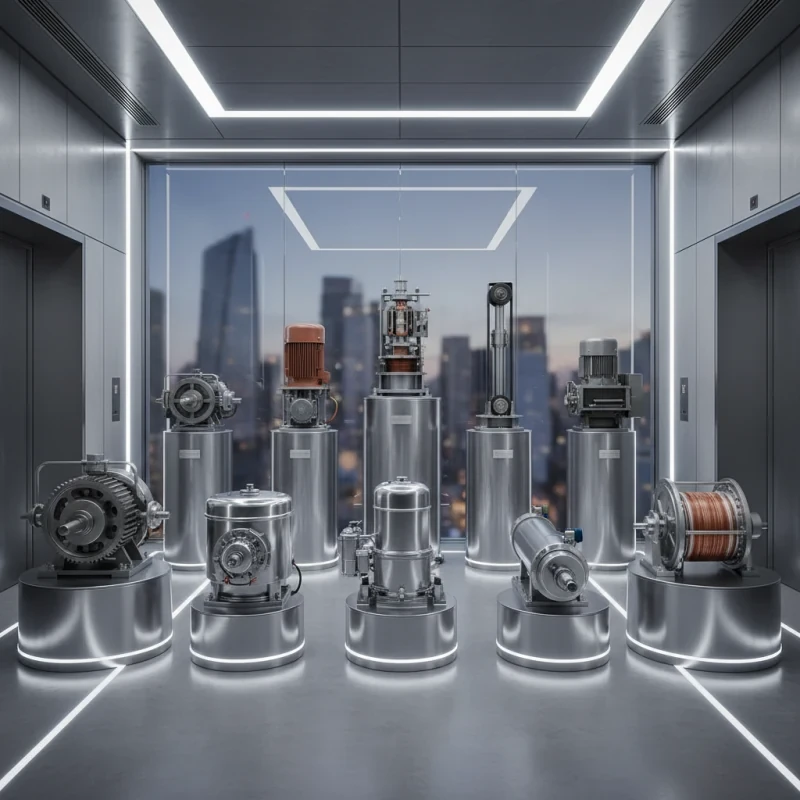
Overview of Elevator Motors and Their Importance
Elevator motors play a crucial role in the functionality and safety of vertical transportation systems. They are responsible for driving the elevator car up and down, making their design and operation fundamental in both commercial and residential buildings. According to a report by the International Elevator and Escalator Industry, a significant percentage of maintenance issues stem from motor failures, emphasizing the importance of selecting the right type of elevator motor.
When considering elevator motors, it's essential to understand their various types and features. For instance, gearless traction motors are often praised for their efficiency and minimal maintenance needs, making them a top choice for high-rise buildings. On the other hand, hydraulic motors provide strong Lifting capabilities, which can be particularly beneficial in low-rise applications. The decision on which motor to utilize should factor in not only the building height but also energy consumption and noise levels.
Tips: When selecting elevator motors, it's advisable to conduct a thorough analysis of the building requirements, including traffic patterns and energy efficiency goals. Implementing advanced motor technologies can enhance performance and extend the lifespan of elevator systems. Regular evaluation of motor condition through predictive maintenance can ultimately save costs and improve reliability.
Types of Elevator Motors: A Comprehensive Classification
Elevator motors are critical components that drive the functionality and efficiency of various lift systems. They can be broadly classified into several types, each tailored to meet specific operational demands. Conventional DC motors are often utilized in older systems, providing reliable performance with excellent speed control. Their simple design allows for straightforward maintenance, making them a favorable choice where refurbishments are needed.
On the other hand, AC motors have gained popularity in modern elevator applications due to their durability and efficiency. Squirrel cage induction motors, for instance, are prevalent for their robustness and lower energy consumption. They offer a range of power outputs suitable for different elevator sizes and applications. Additionally, gearless traction motors are a significant advancement in elevator technology, providing a smoother ride and requiring minimal maintenance. Their integration into high-rise buildings exemplifies how advancements in motor technology have enhanced the speed and performance of elevator systems, catering to the rising demand for efficient vertical transportation.
Top 10 Elevator Motor Types and Their Essential Features
| Types of Elevator Motors | Efficiency Rating (1-10) |
|---|---|
| Geared Motors | 8 |
| Gearless Motors | 9 |
| Permanent Magnet Motors | 10 |
| AC Induction Motors | 7 |
| DC Motors | 6 |
| Hydraulic Motors | 5 |
| Linear Motors | 8 |
| Synchronous Motors | 9 |
| Stepper Motors | 6 |
| Servo Motors | 7 |
Characteristics of AC Elevator Motors and Their Applications
AC elevator motors play a crucial role in the efficient operation of modern elevator systems. These motors are preferred in many applications due to their reliability and energy efficiency. According to the International Electrotechnical Commission (IEC), AC motors account for approximately 80% of all elevator drives installed globally. This prevalence can be attributed to their ability to handle variable loads while maintaining consistent performance.
The key characteristics of AC elevator motors include their robust construction and low maintenance requirements. They typically operate at higher speeds compared to DC motors, making them suitable for high-rise buildings where rapid elevation is necessary. Additionally, AC motors operate smoothly with lower noise levels, which is a significant consideration in residential and commercial applications. According to a report by the Elevator World, the global demand for energy-efficient elevator systems is projected to increase by 5% annually, further underscoring the importance of AC motors in meeting these needs.
In terms of applications, AC motors are widely used in both traction and hydraulic elevators. In traction elevators, their ability to provide constant torque is invaluable for transporting heavy loads at high speeds. In hydraulic systems, AC motors enhance the performance of pumps, improving the overall efficiency of these elevators. As the industry continues to innovate, the demand for advanced AC motor technology is expected to grow, driving further enhancements in energy efficiency and operational reliability.
Insights into DC Elevator Motors and Their Benefits
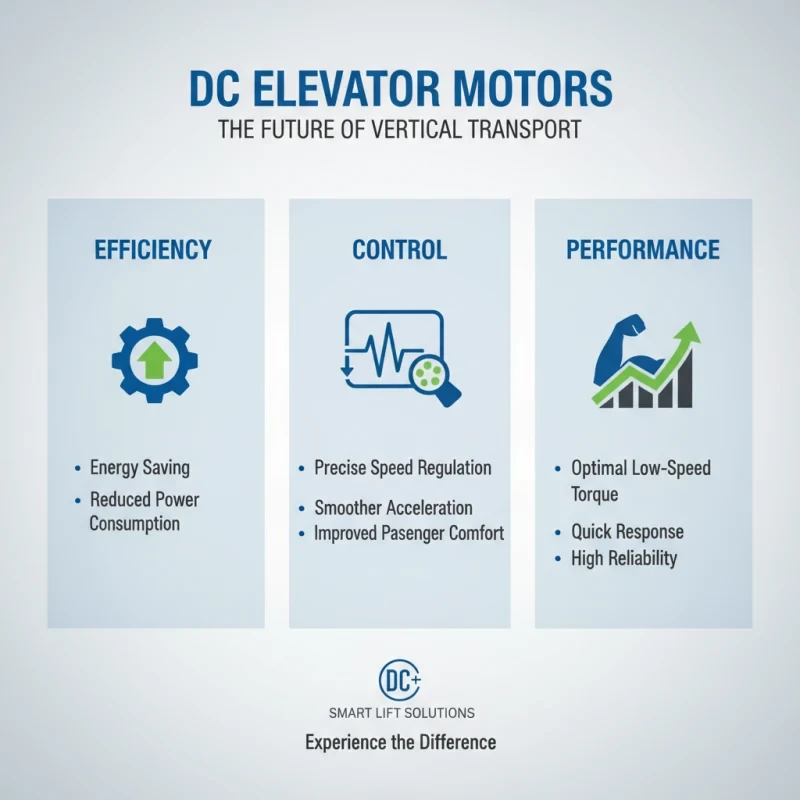
DC elevator motors are increasingly popular in modern elevator systems due to their exceptional efficiency and control capabilities. These motors operate on direct current, allowing for precise speed regulation and smoother acceleration, which not only improves passenger comfort but also enhances energy efficiency. One of the standout features of DC motors is their ability to provide optimal torque at low speeds, making them ideal for applications that require quick responses and high reliability.
When considering a DC elevator motor, it's important to understand its advantages. For instance, these motors typically have a simpler design, resulting in easier maintenance and reduced operational costs over time. Additionally, their ability to perform well under varying load conditions contributes to their longevity and reliability, making them a favored choice for both commercial and residential buildings.
Tips: When choosing a DC elevator motor, pay attention to the torque specifications and efficiency ratings to ensure it meets the demands of your building. Regular maintenance checks can also extend the motor’s life and enhance its performance, keeping operations smooth and safe. Lastly, always consult with an expert to tailor the motor choice to your specific elevator requirements for optimal results.
Understanding Gearless Traction Motors for Elevators
Gearless traction motors are a crucial component in modern elevator systems, offering a blend of efficiency and reliability. Unlike traditional geared motors, gearless traction motors operate without intermediate gear systems. This design allows for a more direct transfer of torque from the motor to the elevator shaft, which not only enhances performance but also reduces wear and tear on mechanical parts. The lack of gears results in fewer maintenance requirements and a quieter operation, making it an ideal choice for buildings where noise reduction is essential.
One of the defining features of gearless traction motors is their ability to provide smoother acceleration and deceleration. This is particularly advantageous in high-rise buildings, where elevators must travel long distances quickly and safely. The precise control offered by these motors minimizes the jerk felt by passengers, creating a more comfortable ride. Furthermore, gearless traction systems are generally more energy-efficient, as they consume less power compared to traditional geared systems. This efficiency not only lowers operational costs but also aligns with the growing demand for sustainable building solutions in urban environments.
Top 10 Elevator Motor Types and Their Essential Features Explained
| Motor Type | Power Rating (kW) | Speed (m/s) | Efficiency (%) | Key Features |
|---|---|---|---|---|
| Gearless Traction Motor | 15 - 40 | 1 - 6 | 85 - 95 | High efficiency, low maintenance, compact design |
| Geared Traction Motor | 10 - 100 | 0.5 - 2.5 | 75 - 85 | Torque amplification, cost-effective, reliable |
| Permanent Magnet Motor | 5 - 50 | 1 - 5 | 90 - 98 | High torque density, reduced size, silent operation |
| Induction Motor | 5 - 100 | 1 - 3 | 70 - 90 | Widely used, durable, easy maintenance |
| AC Motor | 5 - 75 | 0.5 - 4 | 80 - 90 | Versatile, low running costs, adjustable speed |
| DC Motor | 5 - 60 | 0.5 - 3 | 70 - 80 | Simple design, reliable speed control, suited for smaller lifts |
| Stepper Motor | 1 - 10 | 0.1 - 1 | 50 - 70 | Precise positioning, compact, low cost |
| Synchronous Motor | 10 - 80 | 1 - 5 | 85 - 95 | Constant speed, high efficiency, low maintenance |
| Linear Motor | 5 - 20 | 1 - 2 | 80 - 90 | No moving parts, high acceleration, precise control |
| Switched Reluctance Motor | 2 - 30 | 0.5 - 2 | 70 - 85 | Simple construction, robust, suitable for various applications |
Safety Features and Innovations in Modern Elevator Motors
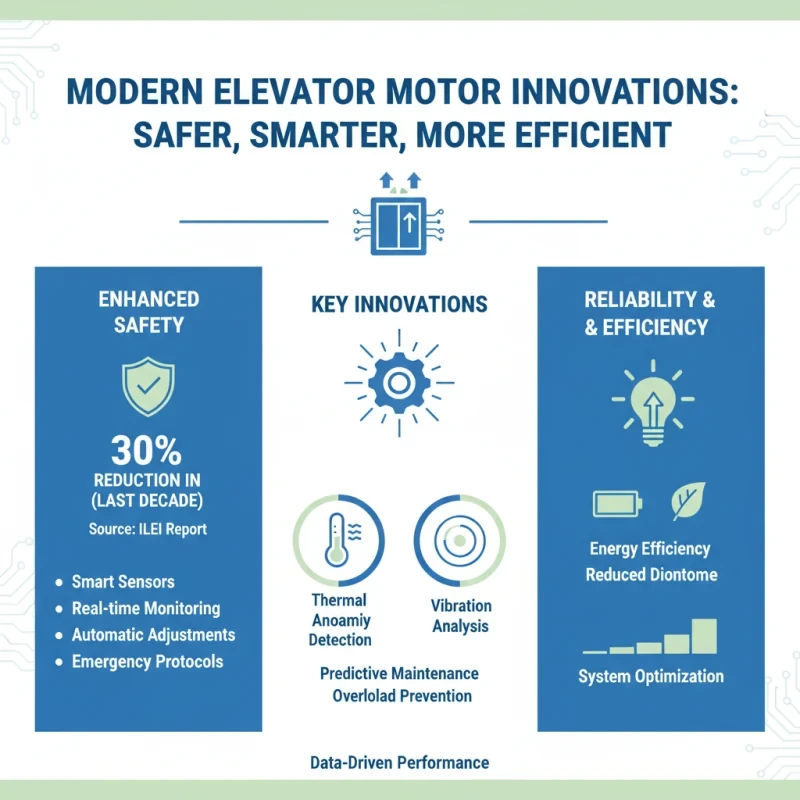
Modern elevator motors have evolved significantly, incorporating advanced safety features and innovations that enhance the reliability and efficiency of elevator systems. According to a report by the International Lift and Escalator Industry (ILEI), safety-related incidents in elevators have decreased by over 30% in the past decade, largely due to these advancements. Key innovations include the integration of smart sensors that monitor lift mechanics in real time, allowing for automatic adjustments to prevent overloading and mechanical failures. These sensors can detect unusual vibrations or heat, triggering emergency protocols before a failure occurs.
Moreover, modern elevator motors often feature regenerative drives that not only improve energy efficiency but also enhance safety. Regenerative braking technology can recover energy during descent, reducing overall electrical consumption by up to 30%, as reported by the Energy Department. Additionally, this technology contributes to smoother stops, minimizing the risk of passenger discomfort or injury. The implementation of emergency communication systems, including two-way Intercoms, ensures that passengers can quickly reach help in case of an emergency, further reinforcing the safety aspect of contemporary elevator systems.
Future Trends in Elevator Motor Technology and Design
As technology continues to advance, the future of elevator motor design is leaning towards greater efficiency, sustainability, and smart integration. One significant trend is the development of permanent magnet motors, which offer excellent energy efficiency and reduced operational costs. These motors are lighter and occupy less space, allowing for a more compact elevator design while contributing to lower energy consumption. Furthermore, the integration of IoT (Internet of Things) capabilities into elevator systems will allow for real-time monitoring and predictive maintenance, ensuring optimal performance and extending the lifespan of the motor.
Another promising trend is the push towards regenerative drives, which capture and reuse energy generated during elevator descent. This technology not only enhances energy efficiency but also supports green building initiatives by reducing the overall carbon footprint of high-rise structures. Additionally, advancements in electric motor technology, such as variable frequency drives, are making elevators quieter and more reliable. As the industry embraces these innovations, the focus will be on creating systems that are not only efficient and sustainable but also customizable to meet the changing demands of urban environments.
FAQS
: Elevator motors are responsible for driving the elevator car up and down, playing a crucial role in the functionality and safety of vertical transportation systems.
The main types of elevator motors are gearless traction motors, known for their efficiency and low maintenance, and hydraulic motors, which provide strong lifting capabilities.
The choice of elevator motor should consider the building's height, energy consumption, and noise levels, as different motors are suited for various applications like high-rise or low-rise buildings.
AC elevator motors are preferred for their reliability, energy efficiency, ability to handle variable loads, and their capability to operate at higher speeds, which is essential for high-rise buildings.
Modern elevator motors now feature advanced safety innovations like smart sensors that monitor mechanics in real time, regenerative drives for energy efficiency, and emergency communication systems to assist passengers during emergencies.
Regenerative drives improve energy efficiency by recovering energy during descent and contribute to safer, smoother stops, reducing the risk of passenger discomfort or injury.
The global demand for energy-efficient elevator systems and advanced motor technology is projected to increase annually, driving the need for improved motor performance and operational reliability.
Conducting a thorough analysis of building requirements, implementing advanced motor technologies, and performing regular condition evaluations through predictive maintenance can enhance performance and extend the lifespan of elevator systems.
Safety-related incidents in elevators have decreased by over 30% in the past decade, largely due to advancements in motor technology and integrated safety features.
In hydraulic systems, AC motors enhance the performance of pumps, improving the overall efficiency and effectiveness of these elevators.
Conclusion
Elevator motors play a crucial role in the efficient and safe operation of elevators, making them a vital component in modern buildings. This article explores various types of elevator motors, including AC and DC motors, and their specific characteristics and applications. AC elevator motors are known for their reliability and energy efficiency, while DC motors offer advantages in terms of torque and control. The discussion also delves into gearless traction motors, which provide enhanced performance and reduced maintenance needs.
Additionally, the article highlights the safety features and innovations integrated into contemporary elevator motors, ensuring safer rides for passengers. As technology evolves, future trends in elevator motor design promise improved efficiency, sustainability, and smart functionality, which will redefine the standards of elevator operations and safety. Understanding these aspects of elevator motors is essential for anyone involved in building design and maintenance, as they directly impact the performance of elevator systems.