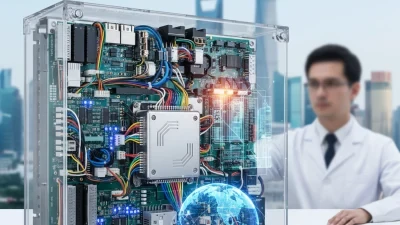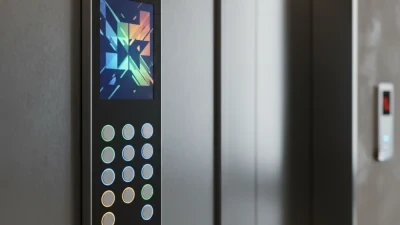

Picking out an AI-powered elevator controllerisn’t just about choosing some softwAre. It’s a decision that impacts safety, how long folks spend getting to their floors, energy costs, and even maintenance plans. A good controller should really be able to read what's happening in the building—it's not just about sticking to fixed schedules. I mean, morning rush means a busy lobby, but in the afternoon, things quiet down and the system needs to adapt. That kind of flexibility really matters.
Professor Albert So, who’s a pretty well-known researcher and author in elevator tech, once said, “Safety must be the top priority when new technology makes its way into the elevator system.” Honestly, I think that should be the guiding principle for everyone. When shopping around, you wanna check things like sensor precision, emergency features, accessibility options, cybersecurity measures, and whether it plays nice with your existing setup. Oh, and don’t forget—it should also keep clear records of maintenance. Having a fancy interface is nice, but it’s not enough.
Don’t just glance at response times; dig a little. Can the system cut down on unnecessary stops but still assign elevators in a way that passengers won’t find confusing? Also, see how it handles shaky network connections. And ask—can your technicians actually understand how it’s making decisions? Seriously, ask again. Hiring reputable brands like OTIS, KONE, Schindler, or TK Elevator, and looking at independent test results and performance data can really help build your confidence. But, let’s be honest, brand names alone won’t guarantee it’s the right fit.
Buildings are messy by nature—sensors drift, passenger patterns switch up, and what works in a simulation might bomb when real chaos hits, like during school dismissals or hospital shift changes. So, before you commit, compare pilot results, service agreements, training plans, and upgrade policies. Sometimes, a hybrid system—part manual, part automated—makes more sense than going all-in on high-tech. Maybe it’s not as flashy, but it’s smarter sometimes.
All things considered, these tips cover the practical stuff—helping decision-makers pick an AI elevator controller backed by real evidence, clear accountability, and fewer nasty surprises down the line.
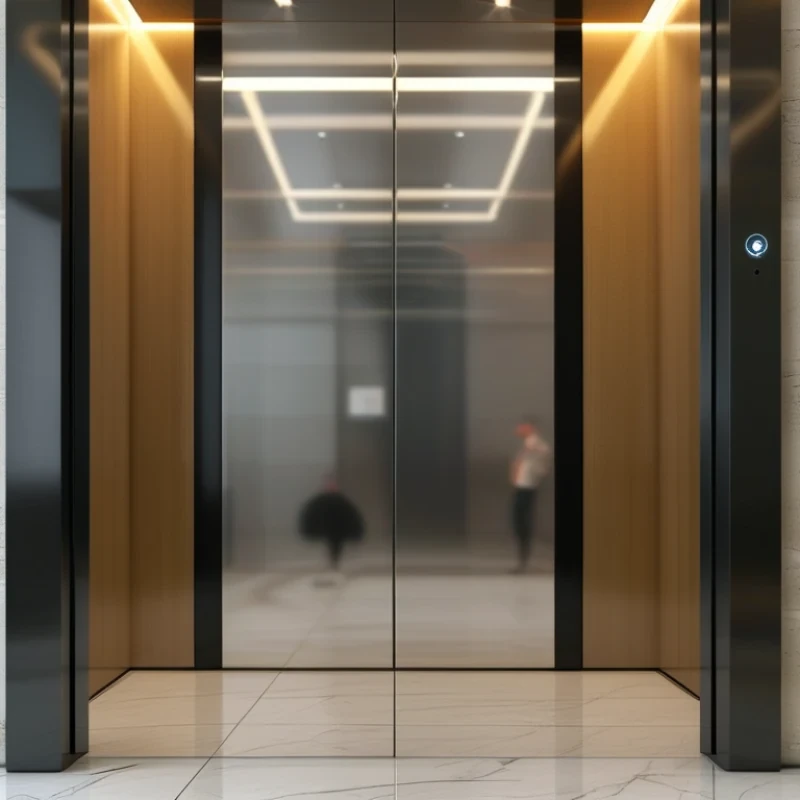
Define the Building’s Elevator Performance and Safety Requirements
7 Tips for Choosing an AI Powered Elevator Controller
Define the Building’s Elevator Performance and Safety Requirements
Tip 1: Measure the building before comparing AI controllers. Record peak traffic, floor distances, door cycles, and waiting times. A hospital needs different priorities than a small office. In practice, five-minute lobby observations often reveal problems that monthly reports hide. Define acceptable wait times, ride comfort, noise levels, and energy targets. Keep the measurements transparent.
Tip 2: Separate intelligent optimization from essential safety functions. The controller may predict traffic and adjust dispatching, but it must not replace certified safety systems. Document emergency operation, overspeed protection, door monitoring, fire service behavior, and backup power needs. Confirm compliance with applicable local elevator codes and have a qualified safety professional review the design. AI can be impressive. It can also misread unusual conditions.
Tip 3: Test realistic scenarios before installation. Simulate school dismissal, shift changes, deliveries, power interruptions, and one elevator being unavailable. Ask how the system responds when data is incomplete or sensors become unreliable. Require clear logs, manual override procedures, and performance reports that facility staff can understand. A technically strong system may still fail operationally if workers cannot diagnose it quickly.
Review the requirements with maintenance technicians and building occupants. Their experience may challenge the original assumptions. That is useful. A small change in door timing or dispatch logic can affect accessibility, comfort, and daily trust. Document every decision, including uncertainties, before approving the controller.
Evaluate AI Control Features and Traffic Management Capabilities
Choosing a Best Ai-Powered Elevator Controller starts with measurable control features, not attractive software screens. Check whether the system predicts lobby demand, groups passengers by destination, and adjusts dispatch intervals during sudden surges. It should also separate morning arrivals from lunchtime movement. Small details matter.
The U.S. Department of Energy’s Better Buildings guidance indicates that elevators and escalators may consume 2–10% of a commercial building’s electricity. That makes idle-time reduction worth testing. Request data showing average waiting time, travel time, energy use, and failed predictions. Compare normal days with events, shift changes, and rainy afternoons. ISO 8100-32:2020 also supports structured traffic analysis for elevator planning. Use its principles when reviewing simulation claims.
Look for adaptive control, but demand human-readable reasoning. Can facility staff see why one car was assigned to a crowded floor? Can the controller recover when sensors lose data? The International Energy Agency reports that buildings account for about 30% of global energy demand, so efficiency cannot be treated as a minor feature. Still, energy savings may increase waiting times if the settings are too aggressive. That trade-off is easy to miss. A perfect prediction is unrealistic. Pilot the controller for several weeks, record complaints beside technical metrics, and review unusual cases manually. A clever algorithm can still make an awkward decision.
Check Compatibility with Existing Elevator Hardware and Software
Compatibility should guide every AI elevator controller decision. A Famous Ai-Powered Elevator Controller may offer impressive prediction features, yet it can fail if the existing drive, encoder, door operator, or safety circuit uses a different protocol. Check voltage ranges, motor-control methods, communication ports, and controller firmware before installation. Request a complete interface list, not a sales summary.
Small details matter. Confirm whether the system supports older serial links, CAN communication, inspection mode, fire-service operation, and emergency recall. It should also exchange data with the building management system without weakening access controls. The International Energy Agency reported that buildings consumed about 30% of global final energy in 2022. Better elevator control can support efficiency, but only when sensors and software provide reliable data. A disconnected sensor creates confident-looking errors.
Review reports from the controller, drive, door system, and maintenance platform together. Compare timestamps during peak traffic, such as 8:30 a.m. Testing must include power interruptions, overloaded cars, blocked doors, and manual inspection controls. The National Institute of Standards and Technology recommends asset identification, access control, and continuous monitoring for connected operational technology. Apply those principles here. A pilot may still expose unexpected faults. That is useful. Do not hide them. Keep a tested fallback mode, document every interface, and require qualified elevator professionals to verify compliance with applicable safety standards before full deployment.
| Compatibility Area | Compatibility Review Priority |
|---|---|
| Drive and Motor | 5 |
| Door Operator | 5 |
| Safety Circuit | 5 |
| Communication Interface | 4 |
| Power Requirements | 4 |
| Inspection Controls | 5 |
| Software Integration | 4 |
7 Tips for Choosing an AI-Powered Elevator Controller
Compatibility should be verified before evaluating AI features. Check the controller’s support for existing drive systems, motors, door operators, safety circuits, communication interfaces, power requirements, inspection controls, and software integration. A controller that cannot work with the installed elevator hardware or meet applicable safety requirements may require costly modernization work.
Assess Safety Standards, Certifications, and Emergency Functions
When selecting a High-Quality Ai-Powered Elevator Controller, examine safety standards before studying intelligent features. The controller should comply with applicable elevator codes and carry certification from a qualified, independent testing organization. Ask for current certificates, test reports, and installation records. Do not accept vague claims.
Inspect how the system behaves during faults. During a power interruption, it should move safely to a suitable landing or remain secured, depending on local requirements. Emergency functions should include controlled door release, fire-service operation, overspeed protection, obstruction detection, and reliable alarm communication. Test these functions in realistic conditions, not only through software demonstrations. Watch the doors close near a light obstacle. Check the emergency button from each floor. Small details matter.
AI can improve traffic prediction and detect unusual motor or door behavior, but safety must not depend on an uncertain algorithm. A certified fallback mode should keep essential control functions stable when sensors fail or data becomes unreliable. Review event logs, diagnostic alerts, software-update procedures, and access controls with a qualified engineer. I have found that clear maintenance records often reveal more than impressive presentations. No system is perfect. A rushed inspection can miss a serious weakness. Ask who responds at 2 a.m., how quickly backup communication works, and whether technicians can operate the lift manually during a rescue.
Compare Data Privacy, Cybersecurity, and System Reliability
Choosing an AI-powered elevator controller starts with the data it collects. Ask whether it records passenger images, access events, voice commands, or only operational signals. Data minimization matters. The 2024 Cost of a Data Breach Report placed the global average breach cost at 4.88 million dollars. Request clear retention periods, deletion controls, encryption, and regional storage options. A privacy dashboard is useful, but it can hide uncomfortable details.
Cybersecurity needs more than a password and a network firewall. Check secure boot, signed firmware, unique credentials, multi-factor administration, and rapid patch procedures. The 2024 Data Breach Investigations Report found that the human element appeared in 68% of breaches. Train maintenance teams, restrict remote access, and log every configuration change. Ask for independent penetration-test evidence. Trust should be earned, not displayed in glossy slides.
Reliability must be tested inside a real elevator shaft, not only in a laboratory. Compare failure rates, recovery times, offline operation, sensor redundancy, and safe fallback behavior. The controller should keep basic movement and emergency functions available during network loss. Request service records from similar buildings and inspect replacement-part planning. A high uptime promise means little without test conditions. I would also run a short pilot during busy hours. It may expose poor predictions, delayed door responses, or confusing alerts. Those imperfections are valuable before full deployment.
Review Installation, Maintenance, and Technical Support Services
Choosing an AI-powered elevator controller requires more than checking processing speed. Installation quality shapes every later result. Ask whether technicians can map door zones, motor feedback, brake circuits, and emergency systems during commissioning. The International Energy Agency’s Buildings 2023 report states that buildings consume about 30% of global final energy. Efficient control matters. However, energy savings should never override safe leveling or reliable evacuation procedures.
Maintenance planning deserves equal attention. Request a written schedule for sensor calibration, fault-log reviews, software updates, and battery testing. The service team should explain how AI decisions are recorded and verified. Under ISO 8100-20 principles, safety-related systems require documented risk controls and validation. That documentation should be practical, not decorative. A technician standing beside a noisy machine room needs clear wiring diagrams and usable diagnostic steps.
Technical support must work after installation day. Check response times, remote-monitoring limits, spare-part availability, and local technician coverage. Ask for escalation procedures when a model misreads vibration or produces repeated nuisance faults. The IEA also identifies digital controls as an important path toward better building efficiency, but real-world performance can disappoint without skilled follow-up. I have seen impressive dashboards hide weak maintenance routines. That is worth questioning. Choose a supplier that provides training, revision records, cybersecurity updates, and measurable service reports. Get those commitments in writing.
Calculate Total Costs, Energy Savings, and Long-Term Value
Choosing an AI-powered elevator controller starts with total cost, not the purchase price. The European Commission’s E4 project found that lifts may consume 3–5% of a building’s energy, reaching 10% in some cases. Measure current kWh, peak demand, service visits, and downtime before comparing proposals. A controller that costs less initially may create higher expenses through poor traffic prediction or difficult integration. Ask for installation labor, software fees, cybersecurity updates, sensor replacement, and training costs in writing.
Energy savings need a defensible baseline. The International Energy Agency reports that buildings account for around 30% of global final energy use. An intelligent controller can reduce unnecessary trips, improve group scheduling, and place idle cars into efficient standby modes. Results vary sharply by traffic patterns. A quiet residential tower will not match a busy hospital. Use a twelve-month comparison, adjusted for occupancy and operating hours. Calculate savings as reduced kWh multiplied by the local tariff, then include demand-charge reductions where applicable.
Look for measured evidence, not impressive dashboards. An Ai-Powered Elevator Controller Company should provide independent test results, failure rates, response times, and references from similar buildings. Request a simple payback model and a ten-year lifecycle estimate. Include energy inflation, replacement parts, and expected modernization costs. My caution is practical: projected savings can look precise while relying on weak assumptions. Require live data access and quarterly performance reviews. Long-term value also includes smoother rides, fewer complaints, and safer maintenance planning. Sometimes, the best investment is the controller that promises less.
FAQS
I elevator controller?
It may, but compatibility must be tested. Confirm support for serial links, CAN communication, inspection mode, and fire-service operation. A missing interface can create misleading system errors.
Test power interruptions, blocked doors, overloaded cars, emergency recalls, alarms, and manual inspection controls. Test it realistically. Qualified elevator professionals should verify compliance with applicable safety standards.
The elevator should move safely or remain secured, according to local requirements. Basic movement and emergency functions should remain available during network loss.
It can predict traffic and identify unusual motor or door behavior. However, essential safety functions should not depend on uncertain predictions or unreliable sensor data.
Ask whether the system records images, access events, voice commands, or only operational signals. Confirm data retention, deletion controls, encryption, and storage locations.
Look for secure boot, signed firmware, unique credentials, multi-factor administration, restricted remote access, and rapid patch procedures. Log every configuration change.
Run a pilot during busy periods, such as 8:30 a.m. Compare recovery times, offline behavior, sensor redundancy, door responses, and diagnostic alerts.
Compare controller, drive, door, and maintenance reports using matching timestamps. Review service records, replacement-part plans, event logs, and software-update procedures.
No. A pilot may reveal poor predictions, delayed doors, or confusing alerts. That is useful, but not conclusive. Keep a tested fallback mode.
Conclusion
Choosing an Ai-Powered Elevator Controller requires more than comparing advanced features. Start by defining the building’s expected traffic patterns, passenger capacity, accessibility needs, response times, and safety priorities. Evaluate how effectively the controller uses AI to manage traffic, reduce waiting times, coordinate multiple elevators, and adapt to changing demand. It should also integrate smoothly with existing elevator hardware, building management systems, and software without creating unnecessary compatibility problems.
Safety and reliability should remain central to the decision. Confirm that the system supports recognized safety standards, certifications, emergency operations, fault detection, and manual override functions. Review its data privacy protections, cybersecurity measures, system uptime, and backup capabilities. In addition, examine installation requirements, maintenance procedures, software updates, training, and technical support. Finally, compare the total cost of ownership, including equipment, installation, energy consumption, maintenance, and future upgrades. A well-chosen controller should deliver measurable efficiency improvements, dependable operation, and long-term value for both building owners and passengers.